
Learning how to choose an electrolyte powder means cutting through two very different marketing stories: the “you need more sodium” story and the “rapid hydration technology” story. Both contain some truth, and neither applies to everyone. This guide explains what electrolytes actually do, how to read the three numbers that matter on a label, and how to match a formula to your real sweat losses rather than to an advertisement.
- Sodium is the headline number: needs range from ~300 mg for light activity to 1,000 mg+ for heavy sweating — most mistakes come from mismatching this.
- Sugar in an electrolyte mix is functional (it speeds sodium absorption), not a flaw — but it makes a product unsuitable for low-carb or low-sugar goals.
- For desk days and normal meals, you may not need an electrolyte supplement at all; food covers most needs.
- Compare price per stick and electrolytes per stick together — dilute formulas look cheap until you dose them properly.
- People managing blood pressure or on sodium-restricted diets should talk to a professional before adding any high-sodium mix.
What Are Electrolytes (and When Do You Actually Lose Them)?
Electrolytes — mainly sodium, potassium, magnesium, and chloride — are minerals that regulate fluid balance, nerve signaling, and muscle contraction. You lose them primarily through sweat, and sodium dominates those losses by a wide margin. That is why serious formulas are built around sodium, with potassium and magnesium in supporting roles.
The practical question is volume. An hour of hard training in heat can cost 1-2 g of sodium; a day at a desk costs very little that a normal diet does not replace. An electrolyte powder is a replacement tool for real losses — from training, heat, illness, or restrictive eating patterns — not a daily requirement for everyone.
How to Choose an Electrolyte Powder: A 6-Criteria Framework
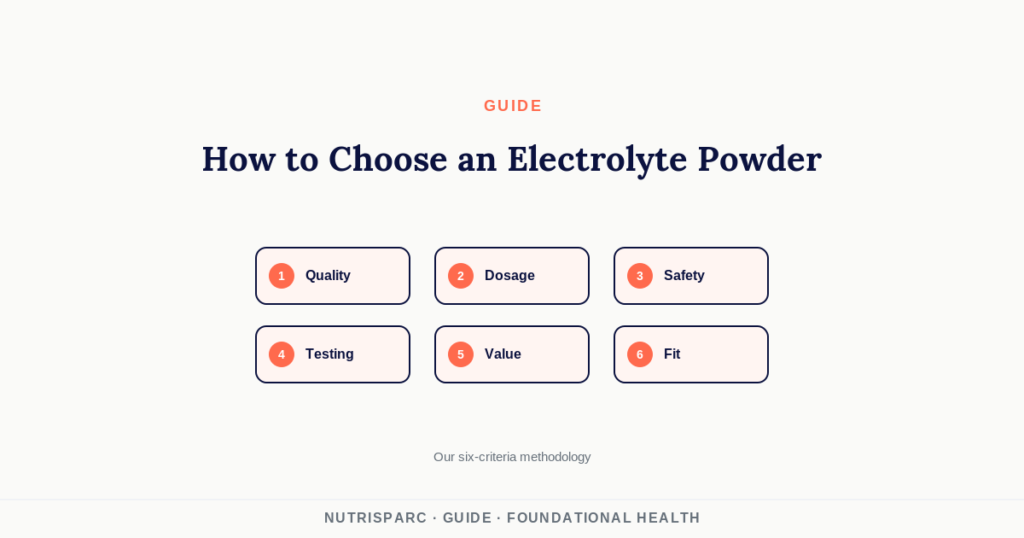
We score every product in this category with the same six-criteria methodology used across the site. For electrolytes specifically:
- Ingredient quality. Forms used, sweetener choice, and whether the formula is built for its stated purpose.
- Dosage transparency. Exact milligrams of each electrolyte per serving — the entire value of the product is in these numbers.
- Evidence alignment. Does the sodium/glucose logic match established rehydration science, or is it flavor water with a health halo?
- Safety profile. Sugar load, sweeteners, and whether the sodium dose fits the intended user.
- Testing & transparency. Third-party testing claims and how verifiable they are.
- Value for money. Cost per properly dosed serving, not per container.
The 3 Numbers That Matter on the Label
1. Sodium (the anchor)
Rough matching guide: ~300 mg suits light activity and daily sipping; 500-700 mg suits moderate exercise of about an hour; 1,000 mg+ targets heavy sweaters, long sessions, heat, and low-carb diets (which increase sodium excretion). More is not better — it is for bigger losses.
2. Sugar (the philosophical split)
Glucose helps transport sodium across the intestinal wall — the principle behind oral rehydration solutions. Formulas like Liquid I.V. embrace this with ~11 g of sugar; formulas like LMNT reject it for zero-sugar profiles suited to keto and calorie control. Neither is wrong; they serve different users.
3. Potassium and magnesium (the supporting cast)
Useful inclusions — typically 200-400 mg potassium and 0-60 mg magnesium — but small next to dietary sources like fruit, vegetables, and dairy. Do not pick a product on these numbers alone.
The Main Types of Electrolyte Products
High-sodium sports mixes
Built for replacement during heavy sweating (example: LMNT Recharge, 1,000 mg sodium, zero sugar). Excellent for their purpose; more than a desk day needs.
Sugar-assisted hydration multipliers
Moderate sodium plus glucose for absorption, often with added vitamins (example: Liquid I.V., 520 mg sodium, 11 g sugar). Convenient and effective for general rehydration if sugar fits your diet.
Light effervescent tablets
Low-dose, low-sugar, portable (example: Nuun Sport, ~300 mg sodium). A sensible everyday option for moderate activity.
Medical-style rehydration
Closer to oral rehydration solution ratios, designed around illness and acute dehydration (example: Pedialyte Sport). Effective, though sweeteners and sugar content vary by SKU.
How to Match a Formula to Your Use
Heavy training, heat, or keto: high-sodium zero-sugar mix. General fitness an hour at a time: moderate-sodium options or a light tablet. Travel, illness recovery, catching up on a rough day: sugar-assisted or medical-style formulas earn their place. Every day at a desk: water and normal meals usually suffice — buying nothing is sometimes the evidence-aligned choice. Re-evaluate seasonally: summer training and winter training are different sodium problems.
Top Electrolyte Picks
Our ranked lineup lives in the best electrolyte powders page. The short version: LMNT Recharge (9.1) leads for training and low-carb use; Liquid I.V. (8.6) is the everyday convenience pick; Nuun Sport (8.2) wins on portability and low sugar; Pedialyte Sport (8.0) brings the most complete electrolyte profile with some sugar trade-offs.
Common Electrolyte Mistakes
- Daily high-sodium sticks without daily losses. A 1,000 mg stick on a sedentary day is solving a problem you do not have.
- Judging sugar as automatically bad. In rehydration, glucose has a job. The question is whether it fits your diet, not whether it is “clean.”
- Comparing price per container. A cheap tub at half the electrolyte dose is not cheaper per effective serving.
- Using electrolytes to fix chronic fatigue. Persistent tiredness has many causes; an electrolyte stick is not a diagnostic tool — a professional is.
- Ignoring the rest of the diet. If you salt your food and eat normally, your baseline needs may already be covered.
Who Should Be Careful?
Anyone managing high blood pressure, kidney disease, or heart failure — or following a medically prescribed sodium restriction — should not add an electrolyte supplement without medical guidance, full stop. The same applies to potassium-sparing medication and potassium-containing formulas. For everyone else, matching dose to actual losses is the main safety lever. This guide is educational — not medical advice.
Final Verdict
Choosing an electrolyte powder well comes down to one honest question: how much sodium do you actually lose? Answer that, then pick the sugar philosophy that fits your diet, verify the three numbers on the label, and compare cost per real serving. The best formula is the one matched to your sweat, not the one with the best advertisement. Formulas change by SKU and season — always check the current label of the exact product you buy.
Frequently Asked Questions
Do I need an electrolyte supplement if I drink enough water?
Sometimes the opposite: large volumes of plain water during long, sweaty efforts can dilute sodium further. If you sweat heavily for over an hour, pairing water with sodium is the evidence-aligned approach. For ordinary days, water plus normal meals is usually enough.
Are zero-sugar electrolytes better?
Better for low-carb diets and calorie control, yes. For maximum absorption speed during acute rehydration, a glucose-containing mix has a mechanistic edge. “Better” depends entirely on the job you are hiring the product for.
Can I just use salt in water?
Functionally, a pinch of salt in water with a meal covers a surprising amount of what commercial mixes do. What you pay for in products is precise dosing, potassium and magnesium, flavor, and portability — conveniences, not magic.
Are electrolyte powders safe every day?
For healthy people matching dose to activity, daily use is generally fine. The concern is stacking a high-sodium product on top of a high-sodium diet with little sweating — sodium needs context, not a default.
What about electrolytes for fasting?
Extended fasting increases sodium and potassium losses, which is why zero-calorie, zero-sugar mixes are popular in fasting communities. Whether flavored, sweetened products fit your definition of a fast is a personal standard — strictly speaking, anything beyond water and minerals is a choice.
Sources
- Sawka, M.N. et al. (2007). Exercise and Fluid Replacement — ACSM Position Stand. Medicine & Science in Sports & Exercise.
- Institute of Medicine (2005). Dietary Reference Intakes for Water, Potassium, Sodium, Chloride, and Sulfate. National Academies Press.
- WHO — Oral rehydration salts: production of the new ORS.