
Learning how to choose an omega-3 supplement means learning to ignore the front of the bottle. “1,200 mg fish oil” can contain 360 mg of actual omega-3s — or 900 mg — and the form those omega-3s take changes how well you absorb them. This guide explains the three label numbers that matter, the triglyceride vs ethyl-ester question, and how to judge freshness and testing without a chemistry degree.
- Ignore “total fish oil” — the numbers that matter are EPA and DHA milligrams per serving.
- Triglyceride (TG/rTG) form is generally better absorbed than ethyl ester (EE); taking EE with a fatty meal narrows the gap.
- Compare products on price per milligram of EPA/DHA, not price per bottle — concentrated oils often win despite higher sticker prices.
- Freshness matters: oxidized fish oil smells fishy and loses value. Per-lot certificates of analysis (COAs) and certifications are your proxy.
- Omega-3s can interact with blood thinners — anyone on anticoagulants should talk to a professional before supplementing.
What Are Omega-3s (and Why EPA/DHA Specifically)?
Omega-3s are a family of fatty acids. The two with the strongest human evidence — EPA and DHA — come mainly from marine sources. ALA, the plant form in flax and chia, converts to EPA/DHA inefficiently (often cited in single-digit percentages), which is why “omega-3” on a flax product and on a fish oil are not interchangeable claims.
Most research on cardiovascular markers, triglycerides, and general intake adequacy is built on EPA+DHA doses in the 250-1,000 mg/day range, with higher doses used in specific clinical contexts under medical supervision. If you eat fatty fish twice a week, you may already be near the baseline most guidelines aim for.
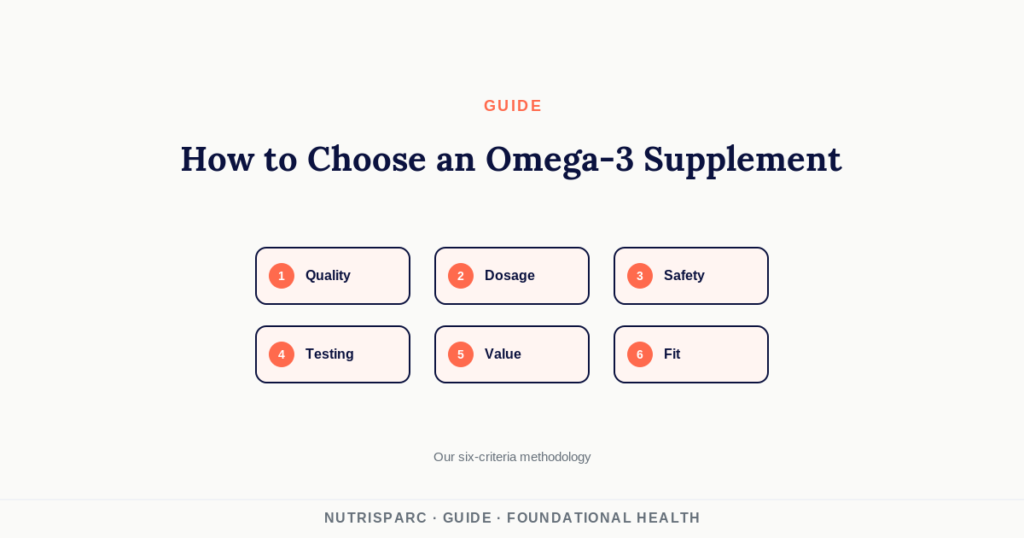
How to Choose an Omega-3 Supplement: A 6-Criteria Framework
We score every product with the same six-criteria methodology used across the site. For omega-3s:
- Ingredient quality. Form (TG/rTG vs EE), source species, and concentration.
- Dosage transparency. Clear EPA and DHA milligrams per serving — not just “fish oil” totals.
- Evidence alignment. Doses that match research ranges rather than fairy-dust amounts.
- Safety profile. Purification standards for mercury and PCBs; freshness management.
- Testing & transparency. USP verification, per-lot COAs, IFOS or equivalent third-party programs.
- Value for money. Price per milligram of EPA/DHA — the only honest comparison in this category.
The 3 Label Numbers That Matter
1. EPA + DHA per serving
Flip the bottle. A “1,200 mg fish oil” softgel may deliver ~360 mg EPA+DHA (a standard pharmacy product) while a concentrated two-softgel serving delivers ~1,100-1,300 mg. Decide your target first, then count softgels honestly.
2. The form: triglyceride vs ethyl ester
TG (and re-esterified rTG) is the form found in fish; EE is a processed intermediate that is cheaper to concentrate. Absorption studies generally favor TG, with the gap shrinking when EE is taken alongside dietary fat. EE is not unsafe — it is an efficiency and price trade-off.
3. Serving size honesty
“Per serving” may mean one softgel or two. Concentrations only compare fairly per softgel or per milligram. This is where cheap-looking bottles quietly lose.
Freshness, Purity, and Testing
Oxidation is fish oil’s specific failure mode: oxidized oil smells and tastes fishy, causes more “fish burps,” and degrades the product. You cannot read oxidation off a marketing page — proxies are recent per-lot COAs (Nordic Naturals publishes them), reputable certifications (USP for Nature Made; IFOS in the broader market), opaque bottles, and sensible expiry margins. Heavy metals and PCBs are handled well by modern molecular distillation; certified products state it. Sustainability marks like Friend of the Sea or MSC tell you about sourcing, not potency — worth having, not a quality guarantee by themselves. As always: certifications change, so verify the marks on the current label.
Top Omega-3 Picks
Our ranked lineup lives in the best omega-3 & fish oil supplements page. The short version: Nordic Naturals Ultimate Omega (9.2) leads on TG form, concentration, and per-lot COAs; Sports Research Triple Strength (8.8) is the value-concentration pick; Nature Made Fish Oil (8.3) is the USP-verified pharmacy staple; Nature’s Bounty 1200 mg (7.8) is the budget entry with the trade-offs you would expect.
Common Omega-3 Mistakes
- Buying “1,200 mg fish oil” as if it meant 1,200 mg of omega-3s. Read the EPA/DHA lines.
- Comparing bottles by price. A $12 bottle needing 4 softgels per dose is rarely cheaper than a $30 concentrated one.
- Ignoring form entirely. If two products cost the same per mg, the TG form is the better default.
- Storing them badly. Heat and light accelerate oxidation — a car glovebox is the worst storage location available.
- Megadosing without a reason. High-dose omega-3 therapy is a medical context, not a default setting.
Who Should Be Careful?
Omega-3s have mild blood-thinning properties. Anyone on anticoagulant or antiplatelet medication, with a bleeding disorder, or scheduled for surgery should involve a healthcare professional before supplementing. People with fish or shellfish allergies should look at algae-based EPA/DHA alternatives. Pregnant readers will find DHA recommendations in prenatal care — that conversation belongs with their provider. This guide is educational — not medical advice.
Final Verdict
Choosing an omega-3 well is arithmetic plus skepticism: set an EPA/DHA target, compare price per milligram, prefer the TG form at equal cost, and treat freshness/testing transparency as the differentiator between otherwise similar oils. The front label is advertising; the supplement-facts panel is the product. Check the current label of the exact SKU you buy — concentrations vary even within one brand line.
Frequently Asked Questions
How much EPA and DHA should I look for?
Common reference points: ~250-500 mg combined EPA+DHA daily for general adequacy, with research using higher amounts in specific contexts. Rather than chasing a universal number, pick a target with your diet in mind — fatty fish eaters need less from capsules.
Is triglyceride fish oil really worth it?
At equal price per milligram, yes — better absorption for free. At a premium, it depends: a concentrated EE product taken with meals can be the more rational buy. It is a trade-off, not a moral choice.
What about krill oil and algae oil?
Krill offers phospholipid-form omega-3s at low concentrations and high prices — interesting, rarely cost-effective. Algae oil is the serious option for vegetarians and vegans: real EPA/DHA without fish, increasingly available in solid concentrations.
Why do fish oil capsules make me burp?
Either the oil is oxidizing or the capsule dissolves early. Fresher oil, enteric-coated softgels, freezing the capsules, or taking them with meals all help. Persistent fishy burps from a new bottle are a freshness red flag.
Can I get enough omega-3 from food alone?
Yes — two servings of fatty fish (salmon, sardines, mackerel) per week covers the baseline most guidelines target. Supplements exist for people who do not, will not, or cannot eat that way consistently.
Sources
- NIH Office of Dietary Supplements — Omega-3 Fatty Acids: Fact Sheet for Health Professionals.
- NCCIH — Omega-3 Supplements: What You Need To Know.
- Examine.com — Fish oil reference page.